
KARVE Franchise · Guide
Questions to Ask Before Investing in a Boutique Fitness Franchise
Before signing any franchise agreement, ask about the brand’s method and who owns it, the full cost picture, territory rights, the site and build process, training, marketing, support after opening, and your options to grow or exit. The answers show whether the franchisor is set up to support a partner or is simply selling a licence. Use the twenty questions below as your due-diligence framework.
Request information
One form, about a minute. We reply within 24 hours.
KARVE today
- 7KARVE studios open
- 5countries
- Corporate clubsin London and Dubai
- Partner clubsin Athens, Jeddah and Kuwait City
Drawn from the live territory roster — see every open, sold and reserved market.
01
The brand and the method
The class format is the product. If the method is not owned, a rival can replicate it. If delivery depends on individual instructors rather than a defined system, quality will vary from club to club.
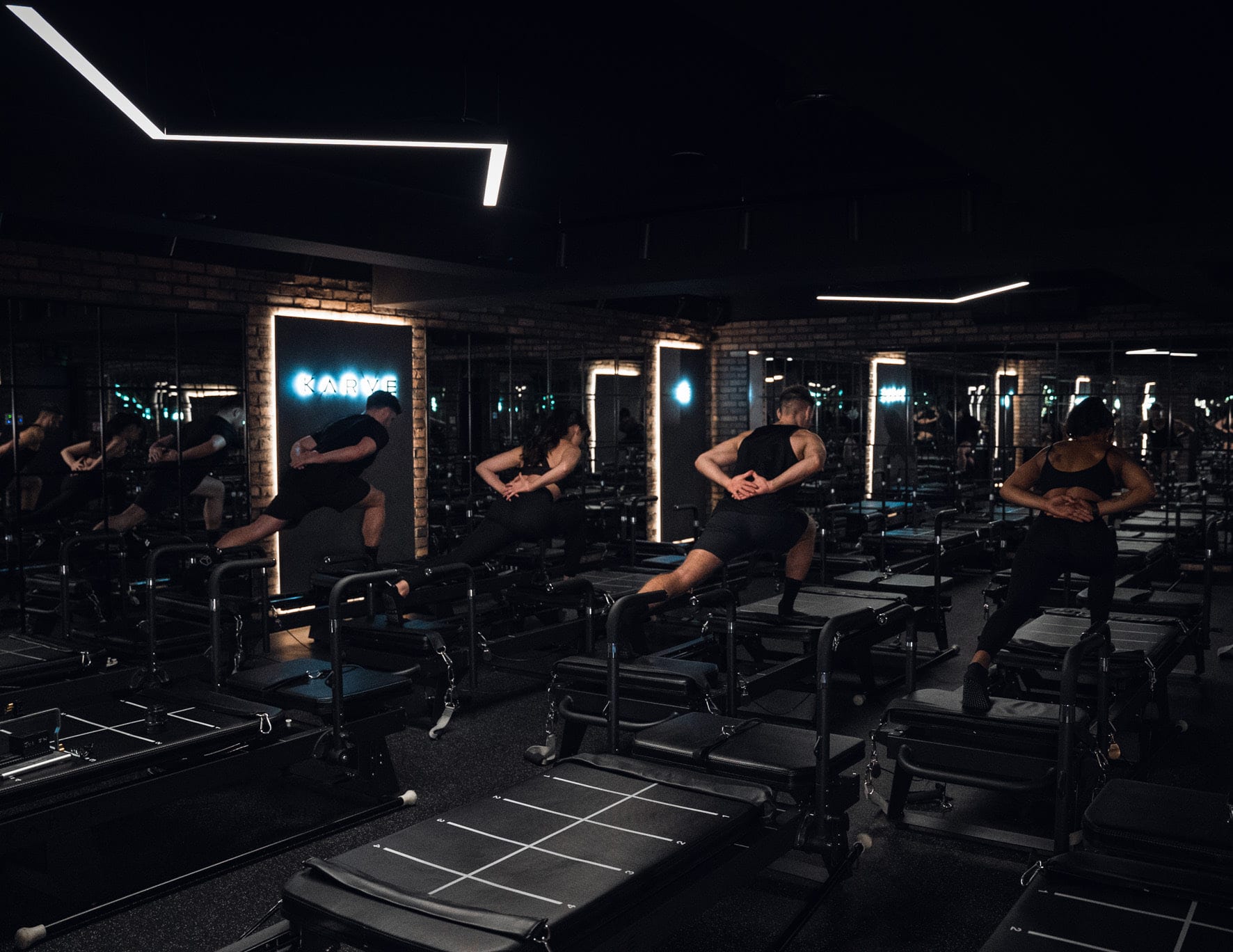
- 1. Who owns the method, and is it trademarked? A good answer: the franchisor holds the intellectual property and can show it; you are licensing something defensible, not a generic format. How KARVE answers: Transformer Pilates™ is KARVE’s trademarked 50-minute method, taught only in KARVE clubs.
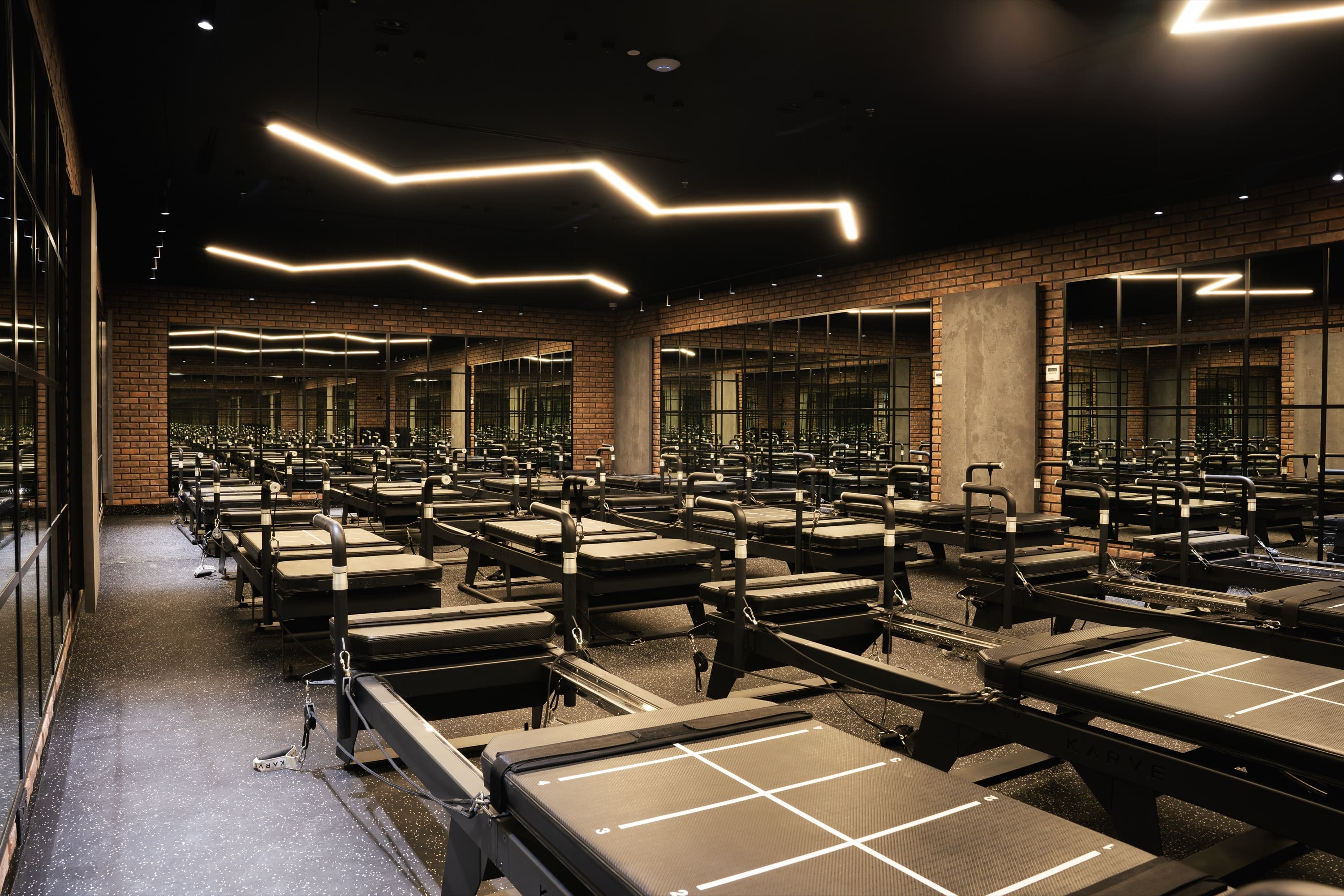
- 2. Can a rival open next door using the same equipment? A good answer: the equipment is proprietary or exclusively supplied, so a competitor cannot buy the same machines and replicate the experience. How KARVE answers: KARVE designs and supplies its own Transformer machines; they are found only in KARVE clubs.
- 3. How is the class delivered consistently across every club? A good answer: a defined format, a certification process and a system for maintaining standards, not guidelines each operator interprets differently. How KARVE answers: every class follows the same 50-minute structure, and instructors are certified through KARVE’s own course and exam at an on-site academy or the academies in London or Dubai.
02
The money
Any figure a franchisor publishes is a starting point, not a total. Understand what is and is not included before you model anything.
- 4. What does the published figure actually cover? A good answer: the franchisor can itemise what the headline figure includes and what sits outside it: fit-out, equipment, working capital and launch costs are often separate. How KARVE answers: a minimum of £500,000 in liquid capital is required to be considered, and full financial disclosure follows a mutual NDA early in the process, before you commit to anything.
- 5. What does full financial disclosure cover? A good answer: every fee, obligation and commitment across the term of the agreement, in writing, before you instruct a solicitor. How KARVE answers: disclosure is shared after the mutual NDA is signed and covers the full picture; KARVE does not publish its fee structure.
- 6. Is there financing on the equipment? A good answer: proprietary equipment is a significant capital line, and structured financing makes the investment more manageable. How KARVE answers: KARVE offers 6 and 12 month financing on the Transformer machines.
- 7. What working capital does the franchisor expect you to hold? A good answer: a realistic figure for pre-opening costs and the operating runway before the club finds its footing; vague answers here are a warning sign. How KARVE answers: this is covered in the financial disclosure under NDA.
03
The territory
Territory is one of the most negotiated points in any franchise agreement. Read the wording carefully: an area of interest and a defined territory are not the same thing.
- 8. Exactly what rights are granted, and how is any exclusivity handled? A good answer: the agreement states what geographic rights you hold, under what conditions another partner could open nearby, and whether country-level rights need a separate arrangement. How KARVE answers: Territory rights are agreed case by case. Country development rights and any exclusivity are available only through a separate development agreement, where applicable.
04
The site and the build
Finding the right unit and fitting it out correctly are two of the hardest phases of opening a boutique club. A franchisor who leaves you to manage both alone is leaving a lot to chance.
- 9. Who finds the site? A good answer: the franchisor has a view on the catchment, footfall and unit type that work for the format and helps you define the brief, even if a local agent does the legwork. How KARVE answers: KARVE guides you on catchment and unit selection, then connects you with a local agent and briefs them on the space specification before you tour anything.
- 10. Who draws the plans? A good answer: architectural drawings that reflect the brand’s requirements precisely, produced from your floor plan. How KARVE answers: KARVE prepares the architectural drawings from your approved floor plan and hands them to your construction team.
- 11. Who manages the build? A good answer: the franchisor sets the specification and stays close enough to catch problems before they become expensive. How KARVE answers: your construction team builds from KARVE’s drawings and specification; you manage the contractor, KARVE provides the technical input.
- 12. What must the format include? A good answer: you know before you sign what the club must contain, so you can judge whether a unit is viable. How KARVE answers: the KARVE club format includes a café, private sessions, retail and recovery features alongside the Transformer studio.
05
People and training
A boutique club is only as good as the people on the floor. Recruitment and certification are not things to work out alone, particularly in a new market.
- 13. Who recruits the instructors? A good answer: the franchisor is actively involved, not just handing you a job description. How KARVE answers: KARVE helps you recruit in your market and sits in on the interviews with you.
- 14. Who certifies the instructors? A good answer: certification run by the franchisor with a clear pass standard; a third-party or self-directed programme is a risk to consistency. How KARVE answers: instructors are certified through KARVE’s own course and exam, at an on-site academy or at the academies in London or Dubai.
- 15. How are front-of-house staff and managers trained? A good answer: reception, retail and management training are all covered before opening day. How KARVE answers: front-of-house and manager training is part of onboarding.
06
Marketing
Launch marketing is often under-supported in franchise agreements: the franchisor provides brand assets and the partner is expected to work out the rest. Ask specifically what is covered and for how long.
- 16. Who runs launch marketing, and what does it include? A good answer: a structured launch plan that goes beyond a social-media kit: digital, events and local activation all matter in the first weeks. How KARVE answers: TONE, KARVE’s in-house marketing agency, runs launch marketing covering digital marketing, media buying, launch and promotional events, starting before opening.
- 17. What happens to marketing support after opening? A good answer: the franchisor’s marketing involvement continues, in a defined form. How KARVE answers: TONE keeps working your market after opening, including in-club retail marketing, and partners have a content library.
07
Operations after opening
The opening is the beginning, not the finish line. Ask what the franchisor’s role looks like once you are trading.
- 18. What review does the franchisor keep doing once you are open? A good answer: a structured, ongoing operational review, not an annual check-in. How KARVE answers: your club stays on KARVE’s operational review; it is a continuing relationship, not a handover.
- 19. What systems do you run on? A good answer: booking, scheduling and member management provided or specified by the franchisor. How KARVE answers: partners run on the KARVE app, their own KARVE website and ClassPass; the systems are defined, so you do not build your own.
08
Growth and exit
An agreement that only contemplates one club is limiting from day one. Ask what the pathway looks like if you want to grow, and what happens if you want to sell. One thing to keep in mind: KARVE partners are operators, not passive investors. The brand is built on the quality of the experience inside the club, and that needs the person running it to be present.
- 20. Can you open more than one club, and can you sell? A good answer: multi-unit pathways written into the agreement with clear development schedules and capital requirements, and transfer terms you can read before you sign. How KARVE answers: KARVE offers single-club, multi-unit and master-territory pathways; multi-unit agreements carry a development schedule and a higher capital threshold, and transfer terms are set out in the franchise agreement you see in full before signing.
In practice
What a partner gets
Each part of the KARVE system is there for a specific outcome at opening.
Site guidance a signed unit that fits the club format
KARVE advises on the location and the unit itself, so the search is aimed at a site that can hold the main Transformer studio and the rest of the club format.
Instructor certification a launch team that can teach the method on day one
Your instructors are trained and certified in the Transformer method before opening, so the first class is taught as a KARVE class.
TONE launch marketing local awareness before the doors open
KARVE’s in-house agency runs the launch plan and local assets ahead of opening, so the club is known in its neighbourhood before day one.
KARVE-supplied Transformers a format identical to London
The machines come from KARVE, so the class taught in your club is the same class taught in Kensington, Chelsea and Victoria.
Illustrative — not a forecast
How it comes together
Agreement
A partner is approved for a market, signs the agreement and begins onboarding led by KARVE’s managing director.
Site and build
KARVE’s site guidance and architectural design system shape the unit into a KARVE club: the main Transformer studio, with the café, private sessions, retail and recovery features alongside.
Team and launch marketing
Instructors are trained and certified in the Transformer method while TONE, KARVE’s in-house agency, builds local awareness ahead of opening.
Opening day
KARVE-supplied Transformer machines are installed and the first class runs in the same format as the London clubs.
This is an illustration of the sequence, not a forecast. It carries no dates, costs or performance figures; commercial terms are shared with qualified applicants only.
Frequently asked questions
How long does the process take from first conversation to opening?
Three to six months from first conversation to signature, then nine to fifteen months from signature to opening, depending on market and site.
What does the process look like before I sign anything?
An introductory call, a mutual NDA and full financial disclosure, a market and territory review, a visit to a live KARVE club, then terms and agreement, followed by the site search. You will have seen the full financial picture and visited a trading club before you commit.
Do I need experience in fitness or hospitality?
You need to be an operator. KARVE provides the method, the training, the systems and the marketing; you bring the capital, the commitment and the ability to run a business. Fitness experience is useful but not required.
Where is KARVE currently looking for partners?
KARVE has corporate-owned clubs in London (Kensington, Chelsea and Victoria, with Clapham opening January 2027) and Dubai, and partner clubs in Athens, Jeddah and Kuwait City, with Muscat opening November 2026, Doha on 1 December 2026 and Singapore in January 2027. Open markets across the UK, Europe, the Middle East, Asia, New Zealand and the Americas are listed on the territories page.
Read next
The opportunity, explained
The franchise
Own something others can’t
The method, the club, the clientele, support, investment and your path to opening day.
Read the full page →Guide
Pilates franchise UK
What a KARVE franchise in the UK actually involves, and which cities are open.
Read →Guide
What a Pilates franchise costs
How to budget: the £500,000 liquid-capital threshold and what the investment covers.
Read →Guide
How to buy a Pilates franchise
The process from first conversation to opening day, step by step.
Read →Guide
Reformer Pilates franchise
Why Transformer Pilates™ and the KARVE club format are different.
Read →Guide
How to evaluate a Pilates franchise
Investment, support and growth: what to check, and how KARVE answers each one.
Read →Guide
What makes a boutique fitness franchise work
The eight things that decide whether a boutique franchise works in the UK.
Read →Guide
Pilates franchise models compared
KARVE, Club Pilates and PILAT3S side by side, from what each publishes.
Read →Open territories
Every open KARVE territory.
Each open market has its own opportunity page. Territory rights are agreed case by case. Country development rights and any exclusivity are available only through a separate development agreement, where applicable.
United Kingdom & Ireland
By country: United Kingdom · Ireland
Europe
By country: France · Italy · Spain · Netherlands · Switzerland · Portugal · Austria · Germany · Denmark · Sweden · Norway · Finland · Czech Republic · Croatia · Hungary · Slovenia · Malta

Got what it takes?
Is your city
still open?
Territory rights are agreed case by case. Tell us where, and we reply within 24 hours.
This information is not a franchise offer. A franchise offer can only be made through a Franchise Disclosure Document. KARVE franchises are not offered, and will not be sold, in any jurisdiction where the offering has not been registered or exempted, and until the required disclosure document has been delivered in accordance with applicable law. Residents of registration states including California, Hawaii, Illinois, Indiana, Maryland, Michigan, Minnesota, New York, North Dakota, Rhode Island, South Dakota, Virginia, Washington and Wisconsin: this advertisement is not an offering. NEW YORK: an offering can only be made by a prospectus filed first with the Department of Law of the State of New York. Outside the United States, KARVE franchises are offered only in accordance with the franchise disclosure and registration laws of each jurisdiction. No agreement is signed and no payment is taken before any required disclosure period has passed. KARVE franchises are granted by KARVE Partners Ltd under licence from Karve IP Ltd, the owner of the KARVE and Transformer Pilates™ trademarks.